
How to Get Better Real Estate Leads With Meta Ads
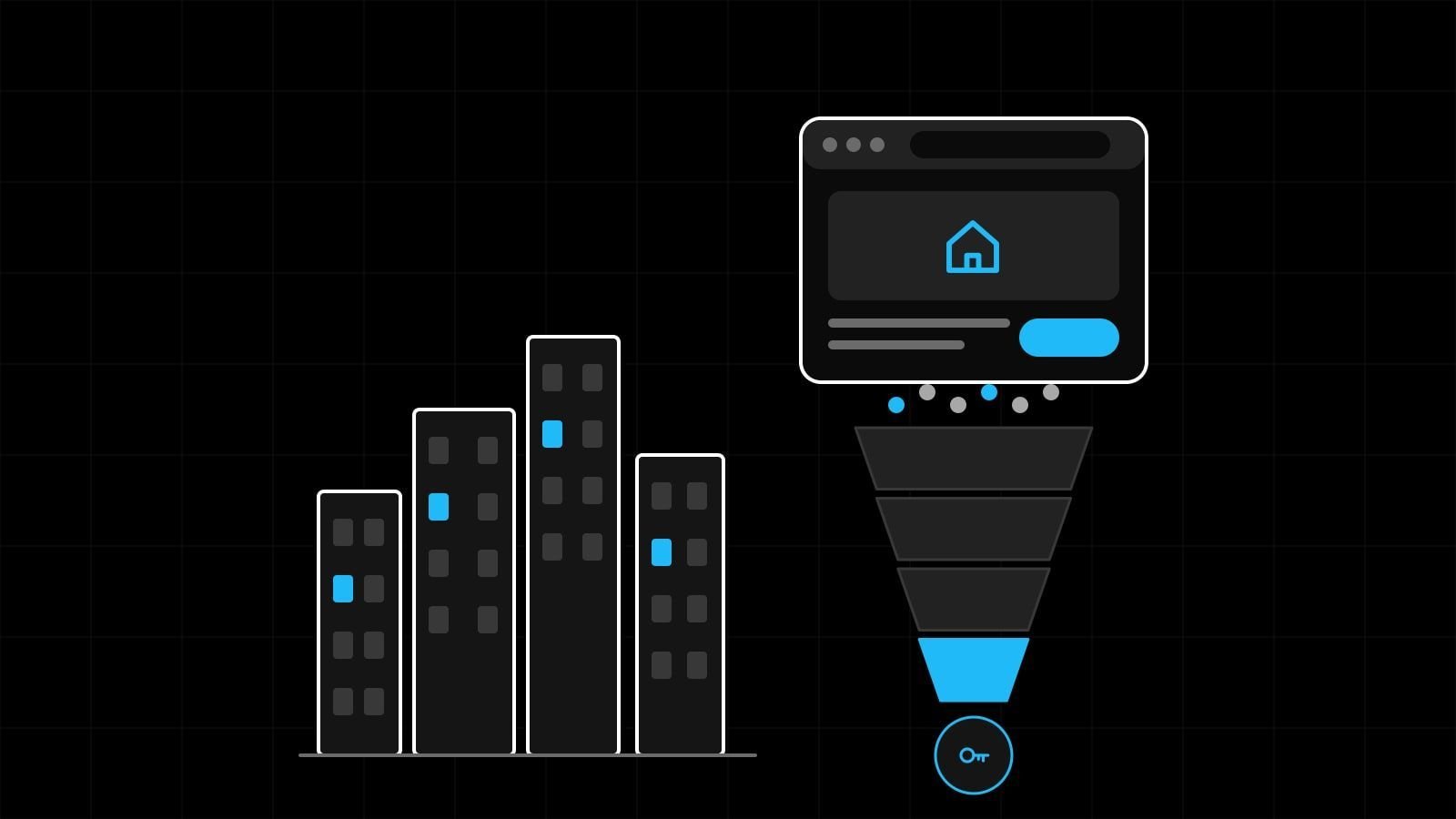
Short answer: Property leads from Meta Ads are easy to collect and hard to sell to when quality is left to chance. Decide what a qualified buyer looks like, attract that person with specific creative, ask two or three qualifying questions, call quickly, and measure cost per site visit rather than cost per lead. No campaign can promise a number of buyers.
If you sell property, you have probably seen the pattern: a campaign fills a spreadsheet with names, and the sales team spends the week hearing "I was just checking" and "wrong number". The cost per lead looks excellent. The cost per sale does not exist yet.
That happens because a lead form measures curiosity, and a purchase needs budget, location fit, timing and a decision-maker. Lead quality is something you design into the whole chain, not something the platform hands you.
What is a qualified real estate lead?
Write it down before you spend anything. For most developers and brokers, a qualified lead is a person who fits four conditions:
- Budget fit: they can afford the range you sell.
- Location fit: the project location works for them, for living or investing.
- Timing: they intend to decide within a period your sales cycle can serve.
- Reachable: a real phone number, and they answer it.
A lead that meets these is worth a site visit. Everything below is about producing more of them and fewer of everyone else.
Why do Meta Ads bring low-quality property leads?
Six causes explain most disappointment.
- The audience is too broad. Anyone with an interest in "real estate" can see the ad, including people who cannot buy.
- The creative attracts browsers. A glamorous render with no price band, size or location invites everyone.
- The form is too easy. One tap and a pre-filled number produces volume, and a lot of accidental submissions.
- Nobody qualifies the lead. The first call is a pitch, not a set of questions.
- Follow-up is slow. Interest cools quickly, and a lead called two days later is a stranger again.
- Nothing returns to the platform. The ad system optimises toward form submissions because that is all it can see.
How do you decide who to show the ad to?
Start with the project, not the platform. Where is it, what does it cost, and who realistically buys it? A compact apartment near a workplace cluster attracts different people from a plot on a highway.
Use location targeting around the areas buyers actually come from, and layer age or interest options only when you have a reason. If you have customer data, such as a list of previous enquirers or buyers, Meta lets you build audiences from it. Follow platform rules and privacy requirements when you do, and do not upload data you have no permission to use. Narrow audiences are not automatically better; give each campaign enough room to learn, and expect to adjust after the first results.
What should the ad creative say to attract serious buyers?
Serious buyers want facts a browser does not care about. Good property creative usually names the location plainly, states the type and size range, gives an honest starting-price or price-band language if you are allowed and willing to, and shows real photographs or accurate renders labelled as such.
Two cautions matter. First, every claim must be true and current; property advertising is regulated, and rules differ by state, so check current requirements, including any registration-number and disclosure rules, with a qualified adviser. Second, do not use urgency you cannot honour. A fake "last unit" ruins trust the moment a buyer visits.
Creative that filters is honest about who it is for: "2 and 3 BHK homes near [locality], ready to move" tells a family and an investor different things, and tells non-buyers to keep scrolling. That is exactly what you want.
Which is better for property: lead forms or a landing page?
Both work; they trade volume against intent.
| Instant lead form | Landing page | |
|---|---|---|
| Effort for the buyer | Very low | Higher |
| Typical result | More submissions, more unserious ones | Fewer submissions, more deliberate ones |
| Best when | You can call quickly and have questions ready | You want the buyer to read details first |
| Watch for | Accidental or fake numbers | Slow page, form that does not work on a phone |
If you use Meta's instant forms, add qualifying questions (budget range, when they plan to buy, unit type) and use the review step where available. If you use a landing page, make it a page for that project only, with the location, plan, price language and one action: request a callback or schedule a visit.
What should happen in the first hour after a lead arrives?
Speed and structure decide more sales than creative. A simple system:
- Route new leads instantly to a named person, by WhatsApp notification, a CRM, or a shared sheet that is checked constantly.
- Call within minutes during working hours, and send a short WhatsApp message if the call is not answered.
- Ask the same four qualifying questions in the same order, and record the answers.
- Book a site visit in the same call when the buyer is qualified.
- If the person is not ready, mark a reason and a follow-up date rather than dropping them.
A CRM is useful, but a disciplined sheet beats an unused CRM. What matters is that every lead has an owner, a stage and a next action.
How do you measure lead quality instead of lead volume?
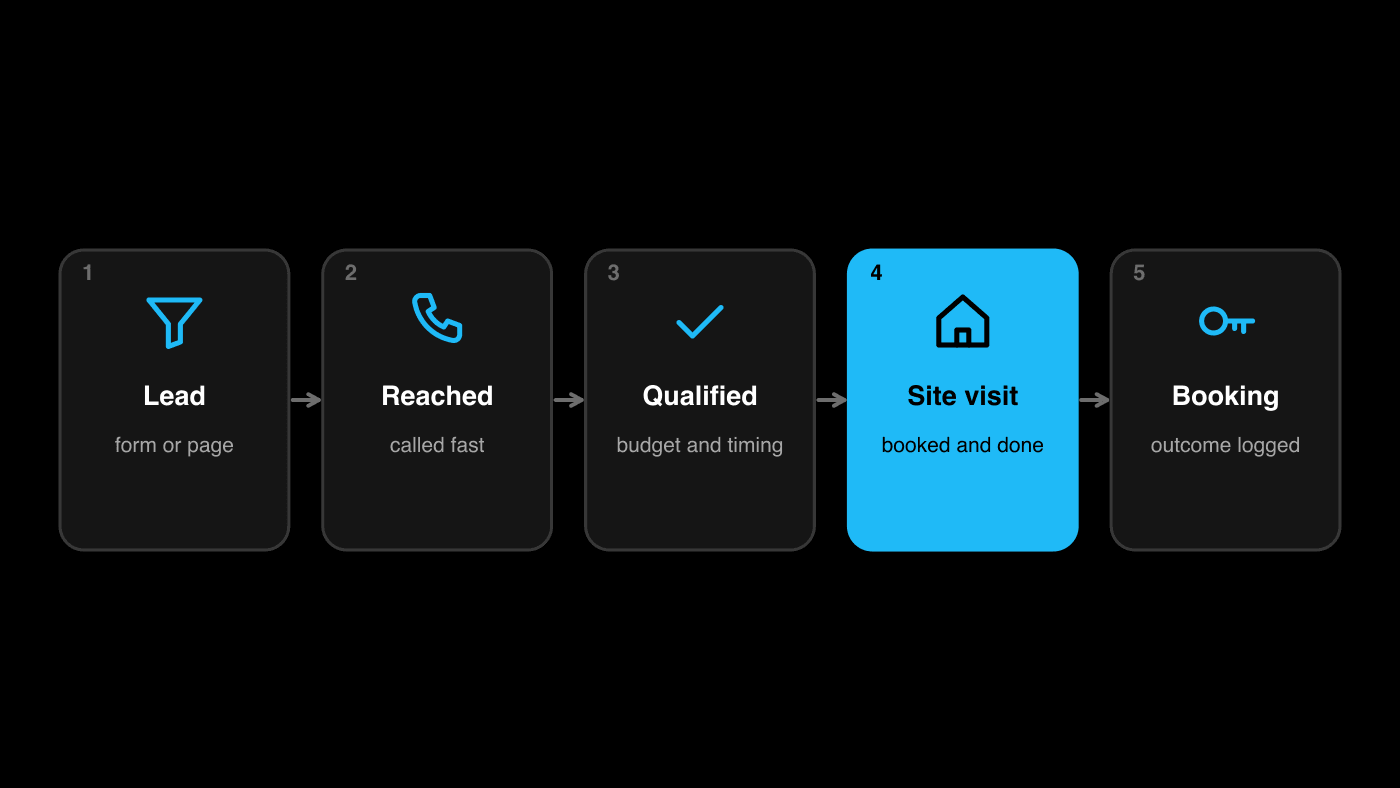
Track the pipeline in stages: leads, reached, qualified, site visit booked, site visit done, negotiation, booking. Then calculate cost per qualified lead and cost per site visit. Cost per booking follows once enough sales have happened to say anything sensible.
One optional refinement is worth knowing. Meta documents a Conversions API integration for CRMs that sends back what happened to a lead, so its system can optimise toward lead quality using your sales funnel. It works with lead ads (instant forms) and takes time to show any benefit, so treat it as a later step once your basic tracking is reliable: see Meta's CRM integration documentation.
What budget do you need?
No universal number exists. Work backwards. If you know how many bookings you need, what share of site visits become bookings, and what a qualified lead costs to acquire, you can estimate a testing budget and a scale-up plan. Our guide on how much a small business should spend on marketing walks through the same economics. Begin with a modest test, judge it on qualified leads and visits, and increase spend only when the pipeline can absorb it.
What this looks like in practice (illustrative, not a client result)
Imagine a builder promoting a mid-range housing project. The first campaign uses a lifestyle video and a one-tap form. Leads are plentiful and few answer calls. In the next round the ad names the locality, unit types and possession status; the form asks budget range and purchase timeline; a sales executive calls each lead within the hour; and the team records reasons when a lead drops out.
Two things typically happen, and neither is dramatic: fewer forms arrive, and a larger share of the ones that do are worth a visit. The right comparison is cost per visit, not cost per form. The team also learns which localities and creatives produce visits, which is information the first campaign could not give them.
Common mistakes
- Optimising for the cheapest lead.
- Using one campaign for every project and price band.
- Letting leads sit until the sales team "gets to them".
- Not recording why leads drop out, so the same waste repeats.
- Ignoring platform advertising policies and local property advertising rules.
- Promising availability or prices the sales team cannot honour.
A lead-quality checklist
- I have written down what a qualified lead is.
- The ad names the location, type and size range.
- The form asks two or three qualifying questions.
- A named person is notified instantly and calls quickly.
- Every lead has a stage, an owner and a next action.
- I report cost per site visit, not just cost per lead.
- I have checked current property advertising rules for my state.
- I change one variable at a time.
Questions property sellers ask about Meta Ads
Do Meta Ads work for real estate?
They can generate enquiries at scale, which is why so many developers use them. Whether those enquiries turn into visits and sales depends on targeting, creative honesty, form design and how quickly and well the team follows up.
Why are my real estate leads fake or not answering?
Easy forms, broad audiences and vague ads attract people who are not ready to buy, and one-tap forms can collect wrong numbers. Add qualifying questions, verify with a fast call, and judge the campaign by visits, not forms.
How do I improve lead quality on Facebook and Instagram ads?
Show specific facts in the ad, use a form or page that asks a few qualifying questions, respond within minutes, and report progress by pipeline stage. For advanced setups, send CRM outcomes back to the platform.
Should I use lead forms or a landing page?
Use lead forms when you can follow up immediately and want volume; use a landing page when you want more deliberate, informed enquiries. Many teams test both and compare cost per site visit.
Can anyone guarantee real estate leads?
No. Reputable marketers can design and measure a campaign, but nobody controls buyers' decisions or market conditions. Be cautious about promises of fixed lead numbers or sales.
The short version
Better property leads come from a chain of decisions: a clear definition of a qualified buyer, honest and specific creative, a form that filters, a fast and structured first call, and reporting that follows leads to site visits. Fix the weakest link first, and let the pipeline tell you where to spend.
If you want your property campaign reviewed from ad to site visit, talk to Advertizer. We can look at targeting, creative, forms and follow-up together and explain what to change first.