
How to Get Wedding Leads Through Instagram and Google
Short answer: Wedding leads come from proof and reach. Show complete real weddings (not just highlights), be visible on Google for local searches and on Instagram where families browse, and make the first enquiry easy to send and quick to answer. Then guide each enquiry to a consultation before a date is lost to someone else.
A wedding is one of the most emotional and expensive events a family plans, and it is decided by more people than one. A couple, parents and relatives all form an opinion. They compare planners, photographers, decorators and venues over weeks or months, and often ask friends. The businesses that win are those that make it easy to picture their own wedding with you.
Who is deciding, and what do they need to see?
Think about the people involved:
- The couple want style, creativity and a sense that you will listen.
- Parents want reliability, clear terms and someone they can talk to.
- Family friends and relatives often make the recommendations that lead to the first enquiry.
So your marketing must speak to taste (visuals) and to reassurance (process, terms, people). A portfolio without reassurance is a gallery. Reassurance without visuals is a brochure.
How should you build a wedding portfolio?
Show whole stories, not a highlight reel.
- Present full weddings or events: the setting, the styling, the moments, the people behind them (with credit).
- Describe the brief and how you handled it: a budget, a venue challenge, a tradition to honour.
- Show a range: different styles, budgets and ceremonies, so a variety of families can see themselves.
- Include real feedback from clients who have agreed to it, with their names or as they wish.
- Always get consent for images of clients and guests, and say where you will use them. Some families are private.
Avoid using other people's images or stock photos as your work.
How do you use Instagram to attract couples and families?
Instagram is where many people first browse wedding ideas.
- Post reels and carousels from real events, with the city, the venue category and the style in the caption.
- Use highlights for wedding types, services, testimonials, packages, how to enquire and frequently asked questions.
- Show behind-the-scenes and planning moments so people meet your team.
- Tag venues and other vendors you have worked with, when appropriate, and encourage them to share.
- Add a clear enquiry link or WhatsApp button to the profile.
Reels reach beyond followers, so aim them at the city and season you serve. Use location tags and clear text on screen.
How do you show up on Google when couples search?
People also search Google for wedding services in their city, and for the venue or area of their wedding. Your Google Business Profile is the doorway. Google's explanation of local ranking is short and worth reading once.
Complete your profile with the right category, accurate contact details and real photographs. Ask satisfied clients for honest reviews after the event, when the experience is fresh. Add pages to your website for the services you offer and the cities you serve, describing what you actually do. To check whether couples can find you, run through why a local business is not showing on Google.
What should your website contain?
A simple website supports everything else. Include:
- A portfolio organised by type of event or style
- A page for each service: planning, photography, videography, decor, makeup
- Packages or guidance on how pricing works, and what affects it
- Your process from first call to the wedding day
- Testimonials and, where allowed, vendor and venue relationships
- Contact details, a WhatsApp button and an enquiry form asking date, city, venue and budget range
Speed on a phone matters. Many enquiries begin there. See our notes on website development.
How do you handle the first enquiry?
Speed and warmth win wedding enquiries, because dates are limited and families are comparing.
- Acknowledge quickly with a personal message, not a template that sounds automated.
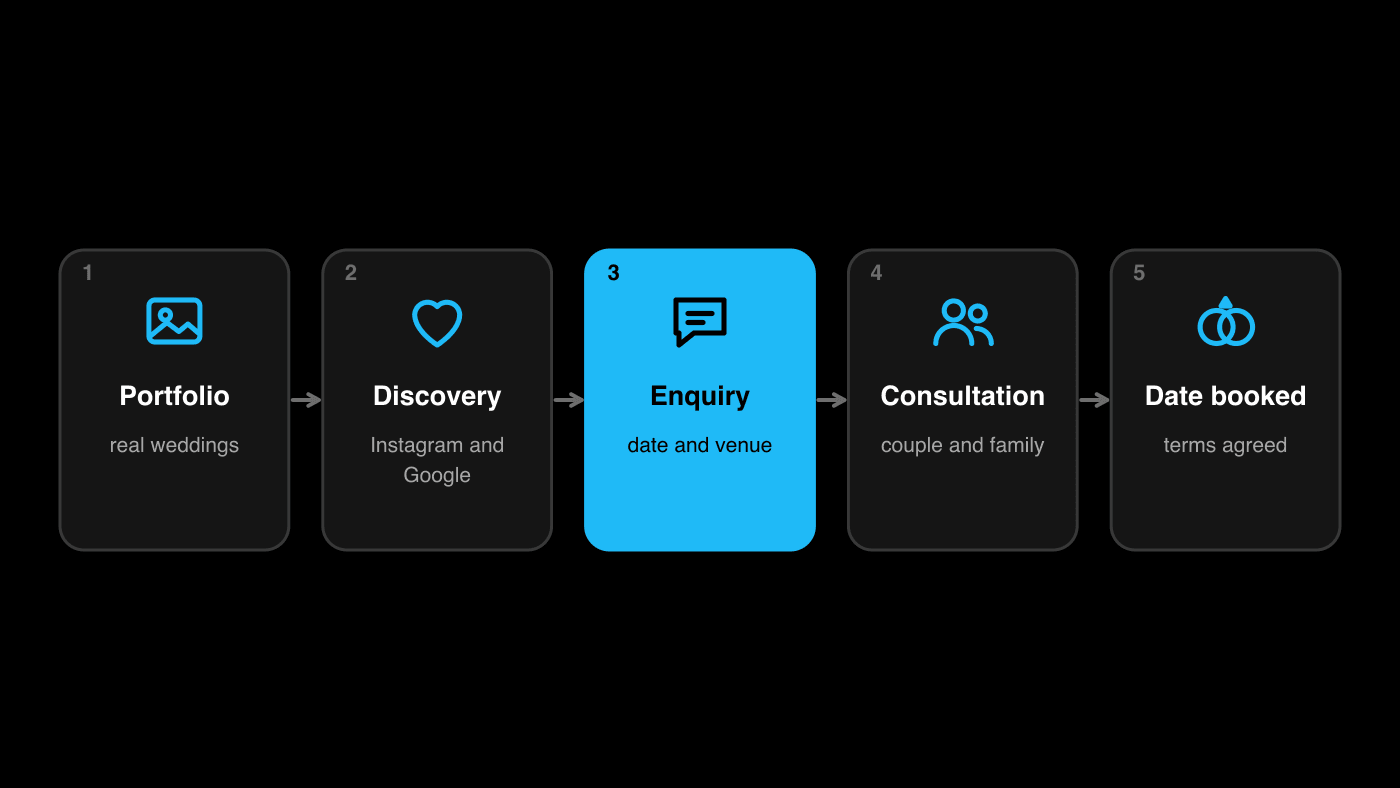
- Ask the essential questions: date, city and venue, guest size, style ideas and budget range.
- Check availability before promising anything.
- Offer a consultation: a call, video call or a meeting, with a clear time.
- Send a summary and your next steps in writing.
- Follow up if there is no reply, courteously, and record the result.
Keep a log with source, date of event, status and outcome. It shows which channels lead to bookings.
How should you plan around the wedding calendar?
Wedding demand follows seasons and auspicious dates, which vary by region and community. Plan your content and outreach months ahead of peak periods, and use quieter months to build a portfolio, gather reviews and refresh pages. When your calendar is full, say so and offer alternative dates or a waiting list instead of leaving enquiries unanswered.
Should you run ads?
Ads are useful when you have a clear offer, a good portfolio and a working enquiry process. Meta Ads can reach people in your city browsing wedding content, and Google Ads can capture searches for your services. Keep the audience local, send people to a page or chat that matches the ad, and track enquiries and consultations, not just clicks. See our Meta Ads services and performance marketing.
How do you use referrals and vendor networks?
Referrals from other vendors, venues and past clients are an important source for many wedding businesses. Build relationships by delivering well, sharing credit, and making it simple for others to recommend you: a short introduction message, a link to your portfolio and a clear description of who you are best for.
How do you protect your dates and handle peak-season enquiries?
In busy periods, more enquiries arrive than you can serve. How you handle them shapes both bookings and reputation.
- Say early whether a date is available, even before pricing. A quick "yes, that date is open" or "no, but here are alternatives" is valuable.
- Be clear about how a date is held: whether you hold it tentatively, for how long, and what confirms it. Put the terms in writing.
- Keep a single calendar that everyone on your team checks before promising a date.
- Refer with care. If you cannot take a booking, recommend colleagues you trust; it costs you a job and earns goodwill.
- Keep a waiting list for popular dates and contact it if plans change.
Couples and families forgive a "no". They rarely forgive silence.
A photographer scenario (illustrative, not a client result)
Suppose a wedding photographer has a beautiful grid and gets occasional enquiries by message. She adds full-wedding stories to her website with the brief and venue type, builds a highlight that explains her packages and process, completes her Google Business Profile and starts asking past clients for honest reviews. She replies to every enquiry within a few hours with three questions and an offer of a call.
Enquiries do not explode. But those who contact her now have context, a clear next step and a real person waiting to talk, and she can see which sources brought bookings.
Common mistakes
- Posting only highlights, never full stories.
- Using images without consent or credit.
- Hiding how pricing works.
- Slow replies during peak season.
- No log of enquiries and outcomes.
- Copying other vendors' captions or styles.
A wedding-lead checklist
- Portfolio shows complete events, with briefs and consent.
- Instagram profile has highlights for services, packages, testimonials and enquiry.
- Google Business Profile is complete, with real photos and honest reviews.
- Website has service pages, process, contact and a short enquiry form.
- Every enquiry gets a personal reply and a consultation offer.
- Availability is checked before dates are promised.
- I record source and outcome for every enquiry.
Questions wedding businesses ask about leads
How do wedding photographers and planners get leads?
Through visible work, referrals, local search, Instagram and a simple, fast enquiry process. The strongest results usually come from combining them and following each enquiry to a consultation.
Is Instagram or Google better for wedding leads?
They serve different moments. Instagram helps people discover and admire your work; Google helps people find you when they are actively searching. Many wedding businesses use both.
Should I show my prices?
Show at least how pricing works and what affects it. Some businesses publish starting packages. Clear expectations attract better-fitting enquiries.
How quickly should I reply to wedding enquiries?
As quickly as you can while staying personal, ideally within hours during busy periods. Couples often contact several vendors at once.
Do I need ads to get wedding leads?
Not necessarily. Ads can help when your portfolio and process are ready, but many businesses grow with referrals, search and content first.
The short version
Wedding clients buy proof and reassurance. Show complete work with consent, be found on Google and Instagram, make the first enquiry easy, answer fast and personally, and turn each enquiry into a consultation.
If you want help turning your wedding portfolio into steady enquiries, talk to Advertizer. We can review your content, profiles and enquiry path together.