
How Organizations Can Build Trust Through Their Digital Presence

Short answer: People trust an organisation online when they can verify who it is, see who is behind it, understand what it does and how it handles their information, and reach it easily. Build that evidence: a clear identity, named people, honest reporting, published policies, consistent profiles and a responsive contact channel. Do not display badges, awards or memberships you do not hold.
When someone meets your organisation online for the first time, they cannot see the building or shake a hand. They look for signals that a real, accountable group of people stands behind the page. If the signals are missing or contradict each other, they leave quietly.
What do visitors look for before they trust an organisation?
Visitors ask a small set of unspoken questions:
- Is this a real organisation? Where is it, and who runs it?
- Does it do what it says? Is there evidence of its work?
- Is it safe to share my details, or to pay or donate?
- Will someone answer if I have a question or a problem?
- Does what I find elsewhere match what this site says?
Everything in this guide answers one of these questions.
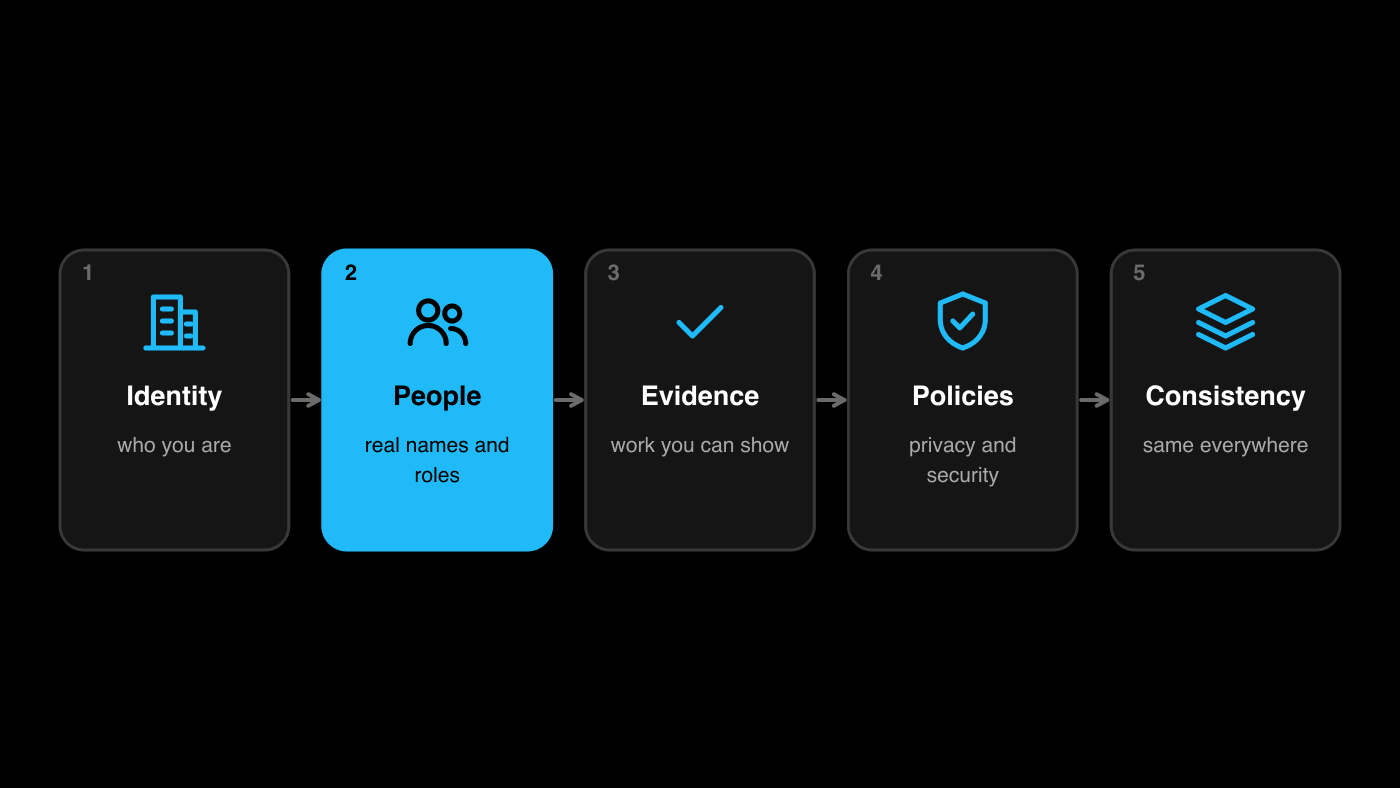
How do you show that you are a real, identifiable organisation?
State your identity plainly, and keep it the same everywhere.
- Your full legal or registered name, and any name you are commonly known by
- Your address, with a map link where visitors are welcome
- Phone and email that are monitored, and their hours
- A short, factual "About" page: what you do, since when (if it can be verified), and your purpose
- Registration or legal status, only where it is real, and stated as it appears in your documents
Do not display registration numbers, affiliations or approvals you cannot document. Where a rule requires you to show one, show it accurately.
Why do people, not logos, build trust?
Named people are more believable than an anonymous brand. Introduce leaders, trustees, faculty or key team members with real names and roles, and a photograph if they are comfortable. Explain what each does. If you publish qualifications, be able to prove them.
For very small organisations, a photograph of the team and a description of who does what can be enough. What matters is that a visitor can see there are people to hold accountable.
What evidence of your work can you publish?
Show your work as it is, without inflation.
- Describe programmes, courses, projects or services and who they are for
- Publish real photographs, with consent, and give context
- Share reports, updates and outcomes in plain language, including what did not go as planned
- Where you cite numbers, say where they come from and what period they cover
- Ask beneficiaries, clients or partners for permission before quoting them
If you have won an award or hold a certification, name it accurately and link to the awarding body where possible. If you do not, do not decorate the site with symbols that imply otherwise.
Why do policies and security matter for trust?
If you collect any information, visitors need to know how you handle it. Publish a privacy policy and terms that describe your real practices, written or reviewed by a qualified person, and keep them current. Use HTTPS on the whole website. Collect only what you need, and explain why. If you accept payments or donations, use reputable payment providers and describe how receipts and refunds work.
Nothing here should be copied from another organisation. Policies that do not match what you actually do can harm trust more than not having them.
How do you keep your presence consistent?
Inconsistency is a common source of doubt. Check that your name, address, phone number, hours and description are the same on your website, Google Business Profile, social profiles and other listings you control. If you have moved or changed your number, update all of them. Google's help page on local ranking says complete and accurate information helps a business appear in local results. If a profile does not appear, why a local business is not showing on Google explains the checks.
How should you handle reviews and criticism?
Reviews and comments are public evidence. Ask people who have really used your services to review you, and never pay for, invent or trade reviews. Reply to positive and negative reviews courteously and factually, offer to resolve problems offline, and update your practices when criticism is fair. A calm, respectful reply to a critical review often builds more trust than a page of praise.
Who answers when people write?
A working contact channel is a trust signal. Publish more than one route: phone, email, WhatsApp or a form. Set expectations about reply times and meet them. Give one person responsibility for checking messages. If you cannot respond quickly, an automatic acknowledgement that says when you will reply is better than silence.
Does accessibility affect trust?
Yes. A website that is easy to read, works on a phone, has descriptive headings and links, sufficient contrast and alternative text on images is easier for everyone to use, including people with disabilities. It signals care and professionalism. Simple things such as clear language, a logical page structure and descriptive link text go a long way.
How do content and social media support trust?
Useful content shows expertise and openness: explanations of how you work, answers to common questions, guidance for the people you serve and updates on real activities. Social profiles help people see you are active and responsive, but they should reinforce your website, not replace it. Post consistently at a level you can sustain, and link back to pages where visitors can find details. Our notes on website development and About Advertizer show how we present who we are and what we do.
What could a first ninety days of trust-building look like?
Trust is built by small, checkable improvements, so a short plan is more useful than a long ambition.
- First month, identity and contact: confirm the organisation's name, address, phone and email everywhere; publish or refresh the About and Contact pages; name the people responsible.
- Second month, evidence: add real descriptions and photographs of your programmes, with consent; publish one plain-language report or update with sources for any figures.
- Third month, policies and conversation: publish a privacy policy and terms that match practice, set up a monitored contact route with a reply standard, and begin asking for genuine reviews.
At the end, ask a person who has never heard of you to find your organisation online and answer five questions: who are you, where are you, what do you do, who runs you, how do I contact you. Fix whatever they could not answer.
A local-trust scenario (illustrative, not a client result)
Imagine a local trust that runs education programmes and has a basic website with a logo, a slogan and a phone number. Visitors cannot tell who runs it or what it has done. The trust adds an About page with its registered name, address and leaders' names, describes each programme with real photographs (with consent), publishes an annual summary with sources for its figures, adds a privacy policy and contact form, and aligns its Google Business Profile with the website.
It does not become famous overnight, but a parent or supporter now has a way to verify it, and an easy route to ask questions.
Common mistakes
- Displaying badges, awards or memberships you do not have.
- Using stock photos of "our team".
- Inconsistent names, numbers or addresses across profiles.
- Publishing figures without a source or period.
- Copying policies from another organisation.
- Leaving messages unanswered.
A trust checklist for organisations
- Legal name, address, phone and email are clear and consistent everywhere.
- Leaders and key people are named, with real roles.
- Programmes and work are described with real evidence and consent.
- Any figures, awards or affiliations are accurate and sourced.
- Privacy policy and terms match real practice; the site uses HTTPS.
- Reviews are earned, and every review gets a courteous reply.
- Messages are answered within a stated time.
- The website works on phones and is easy to read and navigate.
Questions organisations ask about digital trust
How can an organisation build trust online?
By making it easy to verify who it is, showing who is behind it and what it does, publishing honest evidence of its work, protecting people's information and responding when they get in touch.
Do trust badges and certifications help?
Genuine certifications can help when they are real and verifiable. Displaying badges or memberships you do not hold is misleading and can damage trust and credibility.
How important are reviews?
Reviews are public evidence of experience, and Google says reviews can help local ranking. They must be genuine, and how you respond matters as much as the review itself.
What should be on an organisation's About page?
Its full name, purpose, what it does, where it is, who runs it, and how to contact it. Add history and figures only if you can verify them.
Can social media replace a website?
Social profiles help, but a website gives you a stable place for facts, policies and contact details that you control. Use both, and keep them consistent.
The short version
Trust online is built from things a stranger can check. Be clear about who you are, show real people and real work, publish honest policies, keep profiles consistent, earn reviews and answer messages. Leave out anything you cannot prove.
If you would like your organisation's website and profiles reviewed for clarity and trust, talk to Advertizer. We can look at your identity, content and contact routes together.