
Google Ads vs Meta Ads for Healthcare Businesses
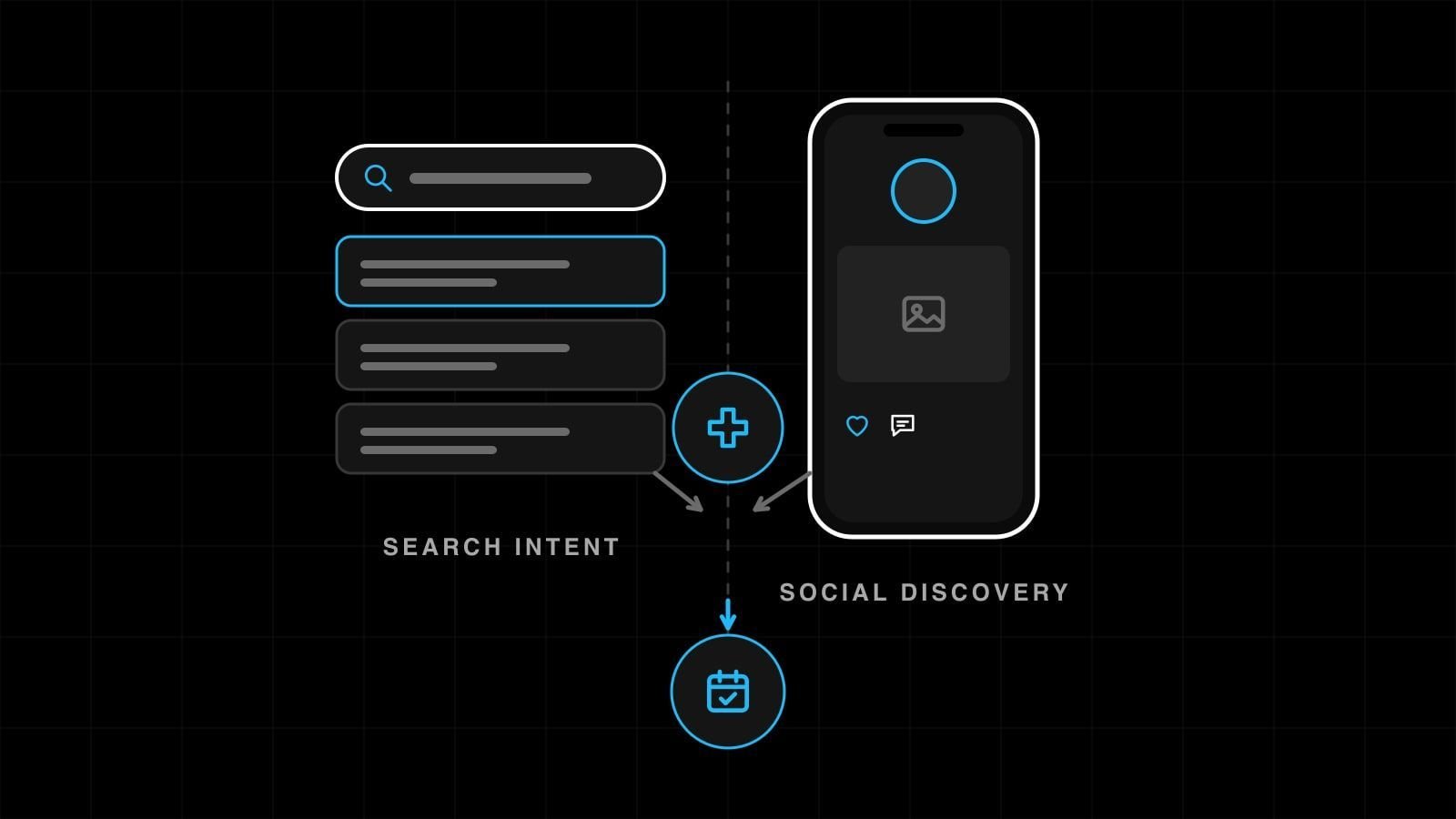
Short answer: Google Ads reach people who are already searching for a service, so they suit demand that exists. Meta Ads (Facebook and Instagram) reach people by location, age and interests before they search, so they suit building awareness and interest. Healthcare adds strict advertising policies on both. Most healthcare businesses do best by understanding each platform's role, not by picking a winner.
This is a marketing comparison, not medical or legal advice. Healthcare advertising is regulated in many ways that vary by country, profession and service, and both platforms publish their own rules. Read them before you plan a campaign.
What is the real difference between the two?
Ask what the person is doing when your ad appears.
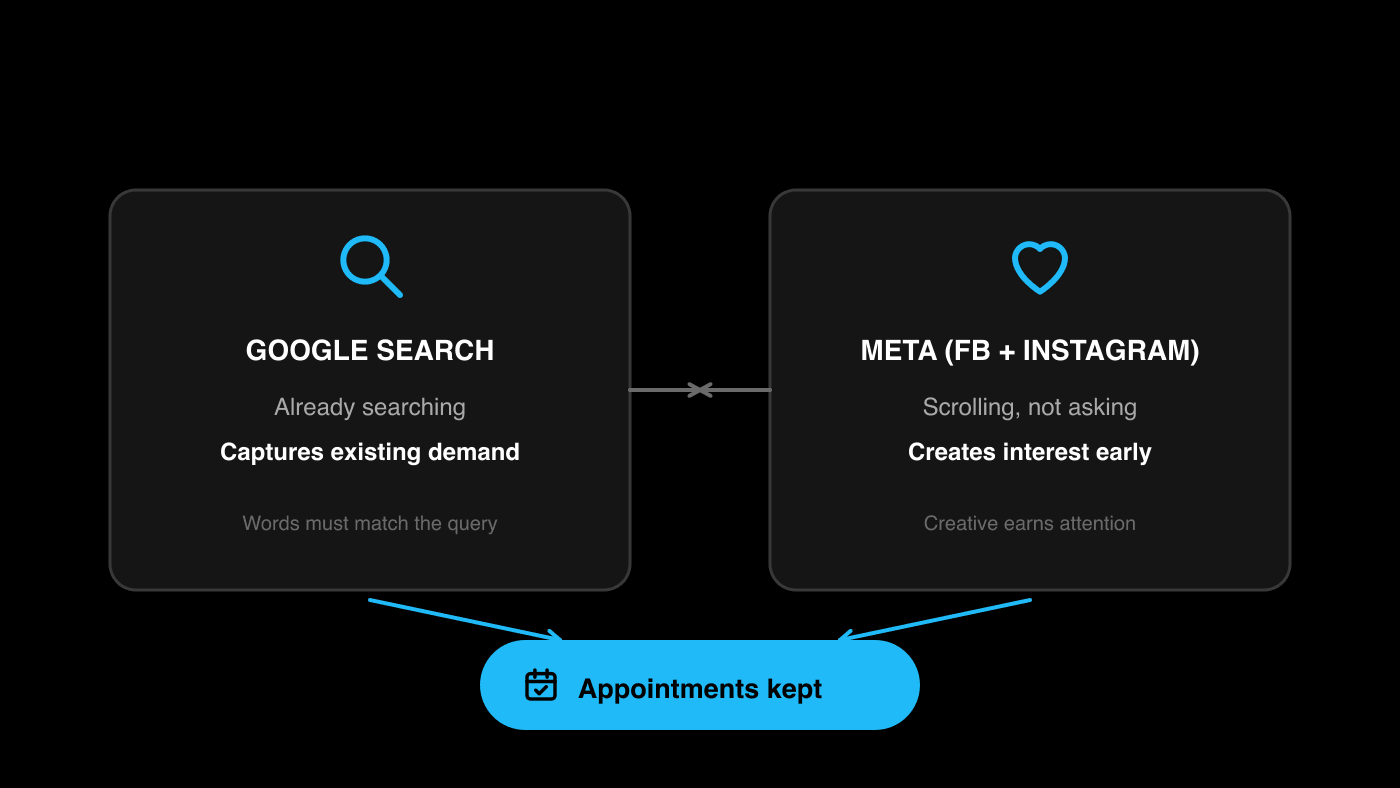
- On Google Search, someone has typed a need: a treatment name, a specialist near them, or a clinic. They are looking. Your ad is a possible answer.
- On Facebook and Instagram, someone is scrolling. They did not ask. Your ad interrupts, and it succeeds only if it is relevant and interesting enough to earn attention.
That single difference explains most of the others.
How do they compare on the points that matter?
| Question | Google Ads (Search) | Meta Ads (Facebook and Instagram) |
|---|---|---|
| Who sees the ad | People searching for related terms | People chosen by location, age, interests and platform signals |
| Intent | Often high: a person is looking now | Usually lower: discovery and awareness |
| Best funnel stage | Capture demand, book appointments | Build awareness, remind, nurture |
| Targeting basis | Keywords, location, timing | Audiences and locations; sensitive-category limits apply |
| Creative | Text first; the words must match the query | Visual and video first; the creative earns the click |
| Reach for a new service | Depends on people already searching | Can create interest before people search |
| Remarketing | Available, with health-category limits | Available, with health and personal-attribute limits |
| Measurement | Calls, forms and bookings when tracked | Leads, messages and bookings when tracked |
| Main risk | Paying for clicks from the wrong searches | Paying for attention that does not become enquiries |
Which is better for getting appointments quickly?
When patients already search for what you offer, search ads can put you in front of them at the moment they are ready to act, with location settings to keep the audience local. For an appointment-driven clinic with a clearly named service in an area with search demand, that is often where measured results start.
Meta ads can also generate enquiries, especially for elective and wellness services where people do not search until they are already interested. They usually need stronger creative and a smoother follow-up, because attention is earned, not assumed. For more on what happens after Instagram interest, see why a clinic is not getting leads from Instagram.
What do the platform policies restrict?
Both platforms have policies specific to health, and they change, so read the current text for your category.
- Meta: the Health and Wellness advertising standard includes requirements such as age targeting for certain cosmetic and health products and services, and limits on content that draws attention to or criticises people's appearance, or makes exaggerated claims. Meta also has rules on ads that imply knowledge of people's personal attributes.
- Google: the healthcare and medicines policy lists prohibited and restricted categories, country-specific requirements and certification requirements for some advertisers. Its rules on personalised advertising and restricted targeting also affect remarketing.
In addition, the professional and legal rules that govern how doctors, clinics and hospitals may advertise in India are separate from either platform's policy. Confirm them with a qualified adviser. A campaign that is allowed by the platform is not automatically allowed by your professional regulator.
How do targeting and remarketing differ for healthcare?
On Google, targeting mostly follows the words people search and where they are. On Meta, you choose audiences by location and demographic options, and the platform's systems find people likely to respond. Because health information is sensitive, both platforms limit how you can use health-related data and personal attributes in targeting and remarketing. Do not assume the same audiences or lists are available as in other industries, and never upload patient data without a lawful basis and the platform's permission. Take advice on privacy obligations before using any patient information in advertising.
What should the creative look like on each?
- Google: clear, factual text. Say the service, the location and one useful fact, such as timings or how to book. Avoid claims you cannot support. Match the ad to the page it opens.
- Meta: a real person or place, in a short video or image, with a simple message and one action. Focus on information and access, such as an open clinic day or an explanation of a service, not on fear or exaggerated outcomes.
Which is better for a clinic, a hospital or a wellness business?
There is no single answer, but a few patterns hold:
- Appointment-based clinics with named services usually begin with search, to capture existing demand, and add Meta ads to build familiarity or to promote a specific event.
- Elective and aesthetic services often depend on discovery, so Meta and content matter more, with search capturing people who have become interested. Meta's health and cosmetic rules deserve particular attention.
- Hospitals and multi-specialty centres need both: search for service-specific demand, and broader campaigns for awareness or health-education content, within policy.
Advertizer's Skin Plus → Skin Pride Clinic case study describes combining positioning, Meta ads, Google Business Profile work and awareness campaigns for a healthcare brand. It shows why the platforms are used together rather than one instead of the other.
How do you measure each platform fairly?
Use the same definition of success for both: appointments booked and kept. Track calls, form submissions, WhatsApp chats and bookings, and label their source. Compare cost per appointment, not cost per click. Google explains conversion tracking in its overview, and Meta describes server-side measurement in its Conversions API best practices. Set the same review period for each, and do not compare a search campaign in week one with a discovery campaign that needs time to learn.
A dental-clinic scenario (illustrative, not a client result)
Suppose a dental clinic has a limited budget. It starts with Google Search ads for its main services in its locality, a complete Business Profile and a landing page with a booking button and phone number. After a few weeks of steady, tracked appointments, it adds a small Meta campaign that promotes a free check-up day with a short video from the dentist, using an audience within a few kilometres.
The Google campaign captures people who were ready. The Meta campaign reaches people who were not searching. The clinic compares both by appointments and adjusts the split.
Common mistakes
- Choosing a platform because of a claim about cost per lead without checking definitions.
- Ignoring platform health policies until an ad is rejected.
- Using patient lists or sensitive data without proper consent and permission.
- Judging Meta by search-style immediate bookings, or Google by reach.
- Sending both to the same generic page.
- No tracking of calls and WhatsApp.
A comparison checklist
- I know what action I want: an appointment, a call, a lead form.
- I have read the current health-advertising policies for both platforms.
- I have confirmed professional advertising rules with a qualified adviser.
- My landing page matches each ad and has one clear action.
- Calls, forms and messages are tracked and labelled by source.
- Both platforms are judged by appointments kept, over the same period.
- I have a plan for patient privacy in any audiences or lists.
Questions healthcare marketers ask about the two platforms
Is Google Ads or Meta Ads better for doctors and clinics?
It depends on the service and the audience. Google Ads suit people already searching for a service; Meta Ads suit reaching people who were not searching. Many clinics use both, in different roles, and judge each by appointments.
Can healthcare businesses use remarketing?
Both platforms restrict how health-related information and personal attributes can be used in targeting. Read each policy, avoid using sensitive data and take advice on privacy before building audiences.
Can I show before-and-after photos in ads?
Platform rules for cosmetic and health-related creative are specific and change, and professional rules may also apply. Check the current policies and get professional advice before using such images.
How do I compare the cost of leads between the platforms?
Compare cost per appointment kept, using the same period and the same tracking. Cost per click or per lead means different things on each platform.
Do I need a website for either platform?
A page that matches the ad and offers a clear action is essential for both. Without one, you lose the people you paid to attract.
The short version
Google Ads capture demand that already exists; Meta Ads create interest and reach people earlier. Healthcare policies limit both, and professional rules sit above them. Use each for what it does best, track appointments, and compare by cost per appointment kept.
If you would like help planning healthcare campaigns within platform and professional rules, talk to Advertizer. We can look at your services, audiences, pages and tracking together.