
Why Your Clinic Is Not Getting Leads From Instagram
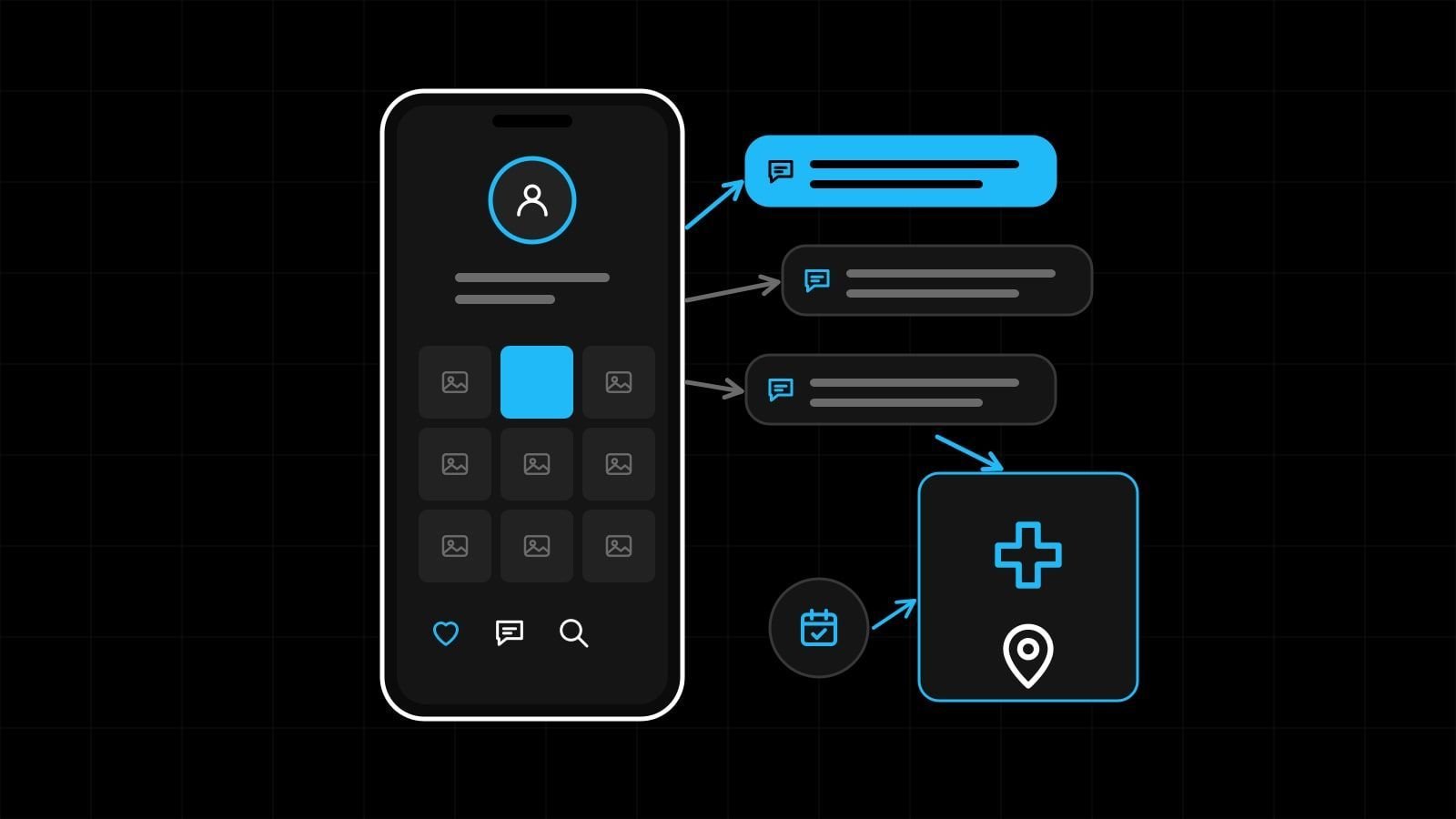
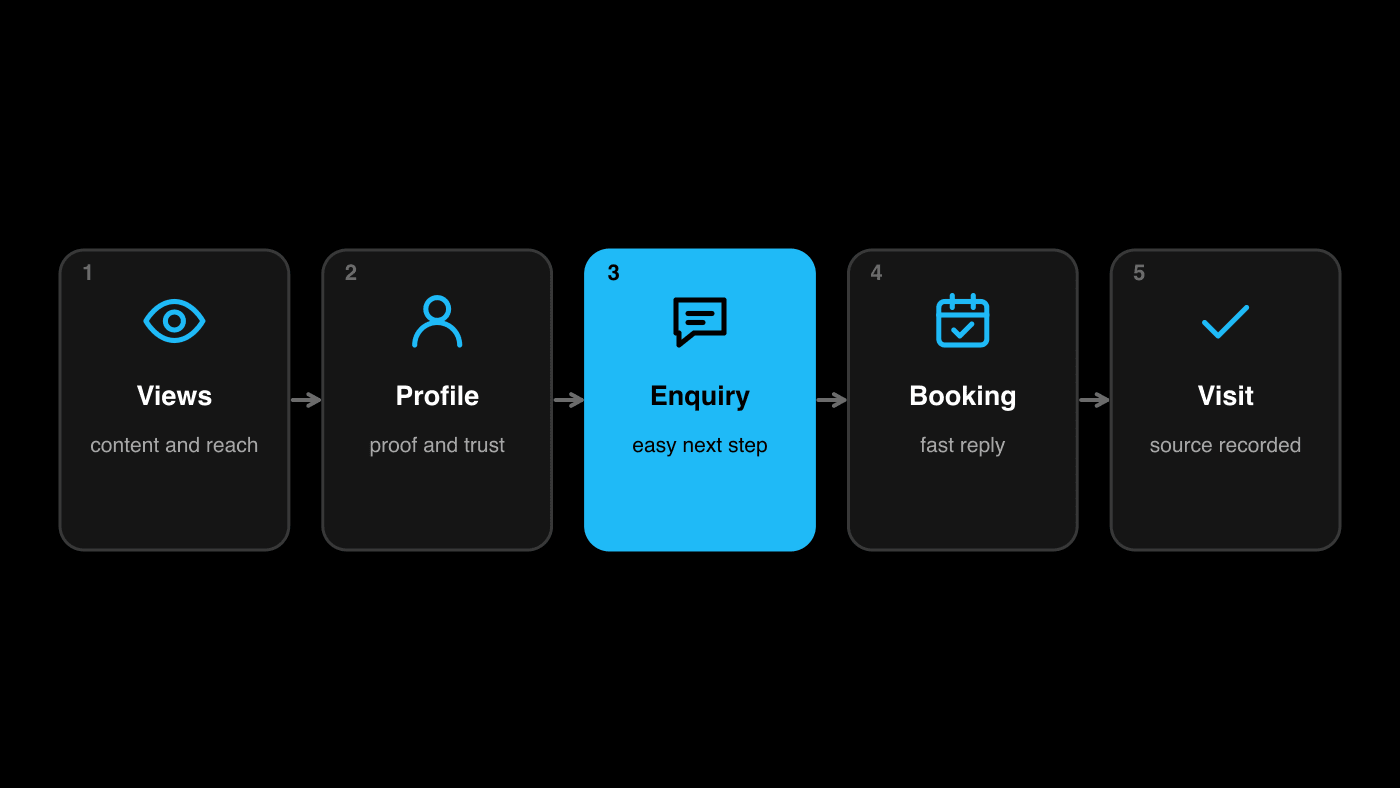
Short answer: Most clinics do not have a reach problem, they have a next-step problem. Views come from content, but enquiries come from a clear offer, believable proof, an easy way to book and a fast, human reply. Check those four things, then how you measure them, before posting more or spending more.
Your reel got thousands of views. Your phone did not ring. That gap is the whole subject of this guide, and it is more fixable than it feels, because a view and an enquiry are produced by different parts of your marketing.
A view is a stranger stopping for two seconds. An enquiry is a person deciding that your clinic is worth a call, a message or a visit. Content earns the first. Everything around the content earns the second.
Are you counting views or enquiries?
Open the last month of posts and write down two numbers: how many people saw them, and how many people actually messaged, called or booked because of them. If you cannot produce the second number, that is the first problem, and it explains why the first number feels like success.
Instagram's own reports show reach, profile visits and link taps. They do not know that a patient called your reception from a saved number. Until you record where each new enquiry came from, at least by asking, you are steering by the wrong instrument.
Why do clinics get Instagram views but no patient enquiries?
Usually one or more of these seven leaks is responsible. They are listed in the order patients meet them.
- The wrong people are watching. Viewers are colleagues, students or people from other cities, not the households within reach of your clinic.
- The content entertains but does not help a patient decide. Trending audio with a smile is not the same as answering a nervous question.
- The offer is vague. "Book your consultation" is a sentence, not a reason. A patient needs to know what the first visit involves.
- Trust signals are missing where the decision is made. Doctor's qualifications, clinic photographs, address and how the first visit works are not one tap away.
- The next step is hard. A link in the bio that opens a long form, a phone number that is not tappable, a WhatsApp number nobody has confirmed as active.
- Replies are slow or cold. An enquiry that waits until the next working day meets a competitor who answered tonight.
- Nothing is tracked. You cannot fix a leak you cannot see.
Are you reaching people who can actually visit you?
A clinic serves a catchment. Someone two hours away who loves your content is a fan, not a patient. Look at your audience breakdown in Instagram Insights: which cities and age groups dominate? If the answer is scattered, your content is being distributed to people with no reason to book.
Fixes that work at this stage are unglamorous. Name your locality in captions and on screen, show the street or building people will recognise, and when you run Meta Ads set the location around the areas you can genuinely serve rather than a whole state.
Does your content answer what a patient wants to know before booking?
Patients rarely ask "who is the best clinic?" They ask smaller questions. What does this treatment involve? Is it painful? How many visits? What should I do before coming? Is the doctor trained for this? Content that answers those questions in the clinic's own words earns saves and messages, which are worth more than likes.
A useful exercise: list the ten questions your reception hears most. Turn each into a short video or carousel answered by the doctor or a senior team member. You now have a content calendar that is honest, repeatable and specific to your practice.
What makes a patient trust a clinic they found on Instagram?
Trust is built from evidence a stranger can check in under a minute. For a clinic that means a real doctor's name and qualifications, photographs of the actual clinic and team, the full address with a map link, working hours, and a Google Business Profile with genuine reviews. If your Instagram says one thing and your Google listing another, the mismatch itself is a warning sign to the patient. The guide on why a local business is not showing on Google covers keeping those details consistent.
Is the next step easy enough for a patient to take?
Test it as a stranger. From your latest reel, how many taps until someone can talk to you? Every extra step loses people. A short path tends to lose fewer people: a clear call-to-action, then a tappable phone number or a WhatsApp chat that opens with a pre-filled message such as the treatment name.
Do not send a first-time visitor to a website's home page and hope. If you use a landing page, it should repeat the promise of the post, show the doctor and clinic, and offer one obvious action. Our website development guide explains why the page an ad lands on decides more than the ad itself.
Organic posts or Meta Ads: what does each do for a clinic?
They do different jobs. Organic posting builds familiarity and proof for people who already found you. Meta Ads put a specific message in front of a defined local audience, so someone who has never heard of you can meet your offer.
A clinic that relies only on organic posts depends on the algorithm's mood. A clinic that only runs ads with weak content pays to show an unconvincing page. Most clinics need both, with ads promoting the best-answering content and a single, clear action.
Ads for clinics come with extra rules. Meta's Health and Wellness advertising standard has specific requirements, for example around cosmetic procedures and how people's appearance may be referenced, and Google Ads has its own healthcare and medicines policy. Read them before you design any creative: Meta's Health and Wellness standard and Google's healthcare and medicines policy. The rules that apply to medical professionals advertising in India are a separate matter, set by regulators and professional bodies, and are not marketing advice: confirm them with a qualified adviser before you publish claims. To choose between the two ad platforms, read Google Ads vs Meta Ads for healthcare businesses.
What happens in the hour after someone enquires?
Clinics often discover this leak last. An enquiry arrives at eight in the evening; the reply comes the next afternoon; the patient has already booked elsewhere. You cannot staff a phone around the clock, but you can set expectations and cover the gap.
- Use a WhatsApp Business greeting message that thanks the person and says when you will reply.
- Give one person ownership of Instagram messages and enquiry forms, with a written reply template that sounds like a person.
- Ask every enquirer one qualifying question, for example which treatment and which day suits them, so the conversation moves forward instead of stalling.
- Keep a simple sheet: date, source, treatment asked about, whether a visit was booked.
How do you know what is working?
You need three counts every week: enquiries received, visits booked, and visits that happened. Add the source of each. For paid campaigns, use the conversion measurement your platform offers (Meta describes its Pixel and Conversions API setup in its developer documentation), and where you use lead forms, connect them to a record you check daily. With that in place you can compare a reel that earned 5,000 views and no calls against a plain post that produced three bookings, and change what you make.
A worked example (illustrative, not a client result)
Imagine a dermatology clinic that posts three reels a week about skin tips. Views are high. Enquiries are two a month. An audit finds the audience is spread across the country, the bio link opens the clinic's home page, WhatsApp is checked once a day, and no one records where patients heard about the clinic.
The fix is ordinary: post treatment-explainer content in the doctor's voice, narrow the location, replace the bio link with a WhatsApp chat pre-filled with the treatment name, put a reply owner and a greeting message in place, and start a weekly sheet. No single change is dramatic. Together they change what a viewer can do next.
Advertizer's published Skin Plus → Skin Pride Clinic case study shows how positioning, Meta ads and Google Business Profile work were combined for a healthcare brand, and the Aesthetic Derm Clinic case study describes website structure and UX work. Read them for what was done and how outcomes are described there.
Common mistakes
- Judging success by follower count instead of enquiries booked.
- Posting every day with no offer, so the account never asks for anything.
- Using before-and-after images or health claims without checking platform policy and applicable professional rules.
- Sending every click to a busy home page instead of one focused page.
- Publishing a WhatsApp number that is not monitored.
- Changing three things at once, then not knowing which one worked.
A checklist to run this week
- I know how many enquiries and visits came from Instagram last month.
- My audience insights show mostly people within reach of the clinic.
- My latest ten posts answer real patient questions, not just trends.
- Doctor name, qualifications, address, hours and map are one tap from my profile.
- My bio link goes to a call or chat, not a generic page.
- Someone owns replies, with a greeting message and a template.
- I have read the current ad policies for health-related advertising.
- I record the source of every new enquiry.
Questions clinics ask about Instagram leads
Does Instagram marketing work for clinics?
It can, when it leads to a clear next step. Instagram helps people discover and judge a clinic, but a patient still needs a simple way to enquire and a prompt reply. The platform does not produce patients on its own; the whole path does.
Should a clinic run Meta Ads or only post organically?
Most clinics benefit from both. Organic content builds familiarity and proof; ads put a specific offer in front of a defined local audience. Start by making sure the organic profile and the enquiry path are sound, then promote what already answers patients' questions.
Why do I get profile visits but no calls?
Profile visits show interest, not readiness. Check what a visitor sees in the first few seconds: the doctor, the location, a clear action and proof. If they have to hunt for a phone number or wait for a reply, visits will not become calls.
Can a doctor or clinic advertise freely on social media in India?
Not necessarily. Medical advertising is subject to rules from regulators and professional bodies, and platforms add their own health-advertising policies. This guide covers marketing mechanics, not compliance. Check the current rules with a qualified adviser before publishing claims.
How many posts a week does a clinic need?
There is no number that works for everyone. Consistency you can maintain with quality matters more than volume. Judge a schedule by the enquiries it produces, not by how busy the account looks.
The short version
If your clinic is getting views but no leads, look past the content. Confirm the right local people are watching, answer real patient questions, show evidence people can check, make the next step one tap, reply quickly and record every source. Fix them in that order, one at a time.
If you want a second pair of eyes on your clinic's Instagram, ads and enquiry path, talk to Advertizer. We look at the whole path, from post to first visit, and explain what we find in plain language.